

There's a particular quality to the light in the underpasses of Vračar. Not the romantic golden hour that photographers chase across famous monuments, but something more honest - the way sodium vapour mixes with daylight at the tunnel mouths, creating zones of transition that feel neither inside nor outside. It's in these in-between spaces that Belgrade first began to truly reveal itself to me, petal by petal, like a flower I hadn't realised I'd been watching open.
I've lived here for nearly three months now. Long enough for the novelty to fade, short enough that discovery still feels urgent. Long enough to have favourite places, short enough to still get lost most days. It's that particular duration where a city stops performing for you and starts letting you see its actual face - worn, complicated, beautiful in ways that have nothing to do with beauty as the guidebooks understand it.
Vračar - a vibrant yet down-at-heel district just east of the city centre wasn't supposed to be the subject. I chose to live here for practical reasons, the kind that involve cost, proximity to amenities and the usual Airbnb criteria. But it turns out cities have their own ideas about what you need to photograph, and Vračar? Well Vračar just kind of insisted. Every walk to buy bread became a lesson in seeing. Every shortcut through an underpass revealed something that demanded attention. The neighbourhood accumulated in my vision like sediment, layer upon layer, until ignoring it would have been a kind of blindness.
The Aesthetics of Worn Things
From above - from the aerial view that maps provide - Vračar looks ordered and comprehensible. Tree-lined streets, parks marked in green, the geometry of boulevards radiating from known points. But the aerial view is only a comfortable fiction. At ground level, the neighbourhood exists in a different register entirely.
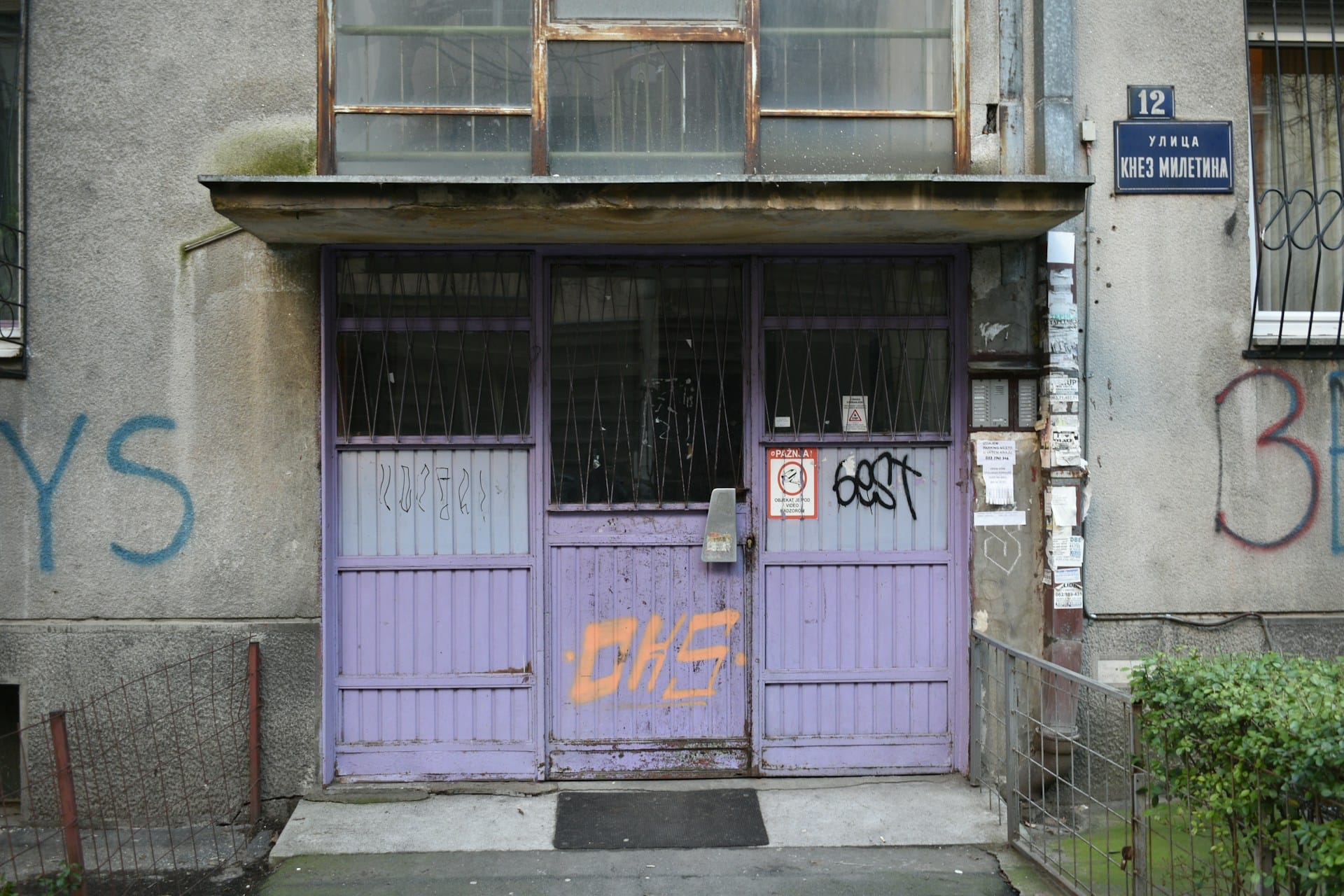
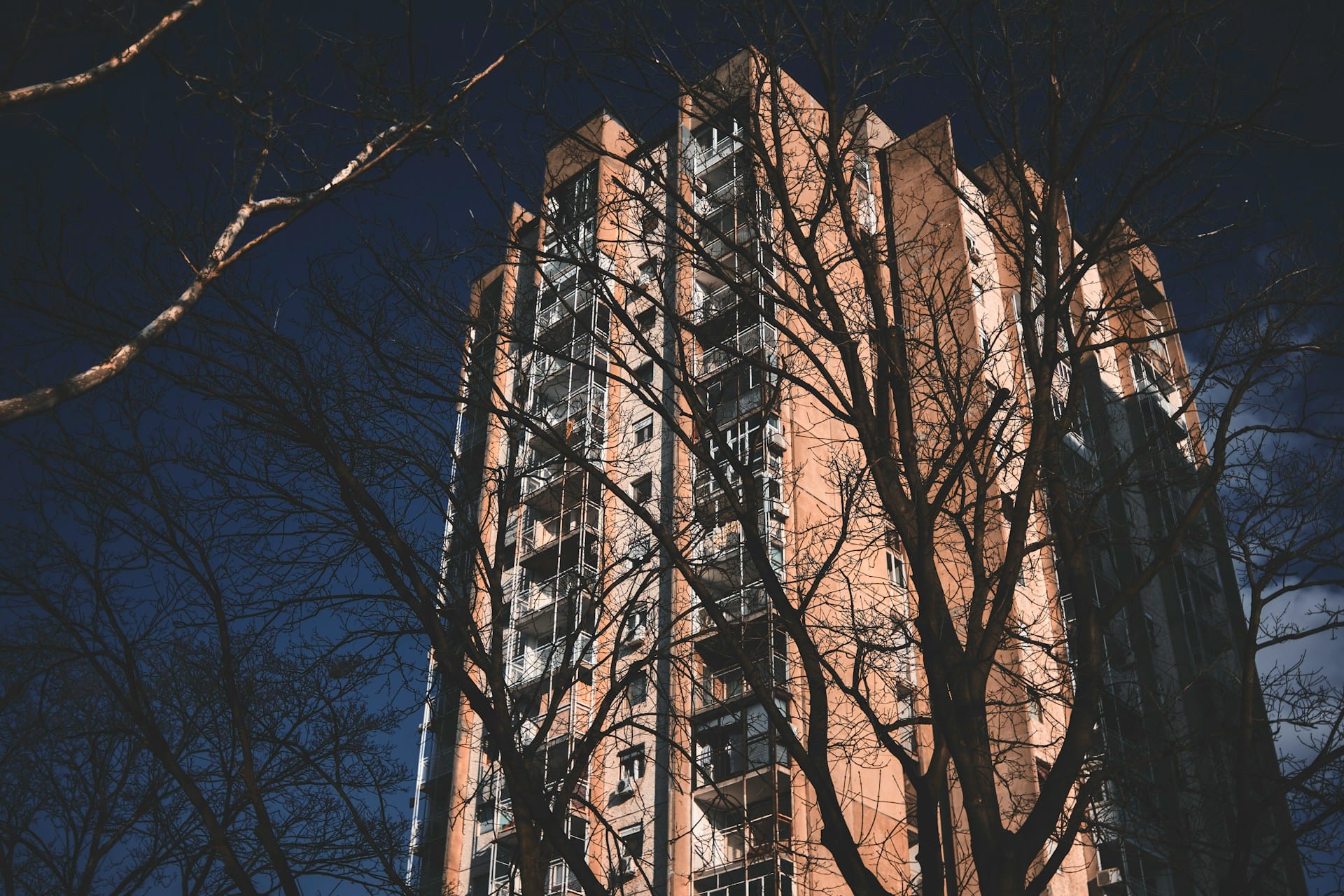
The facades are weathered in ways that speak of specific histories - not the curated patina of heritage districts, but the actual evidence of decades, of deferred maintenance, of priorities that had to be elsewhere - "so Belgrade" in every respect. Paint peels in patterns that feel almost deliberate, revealing layers like geological strata. Concrete aged into something more honest than its original promise of modernity, held together with the myriad graffiti that accompanies most cities. It's buildings carry their years the way faces do, and there's something oddly beautiful about it's refusal to hide time's passage.
I've started photographing Belgrade in monochrome because colour felt like a distraction from what I was actually seeing. That, and because my brother practically insisted. Black and white strips away the superficial and leaves you with structure, with contrast, with the relationships between light and shadow that give a place its actual character. In mono, Vračar stops being picturesque or unpicturesque and becomes simply itself - a study in textures, in the accumulated evidence of lives being lived.
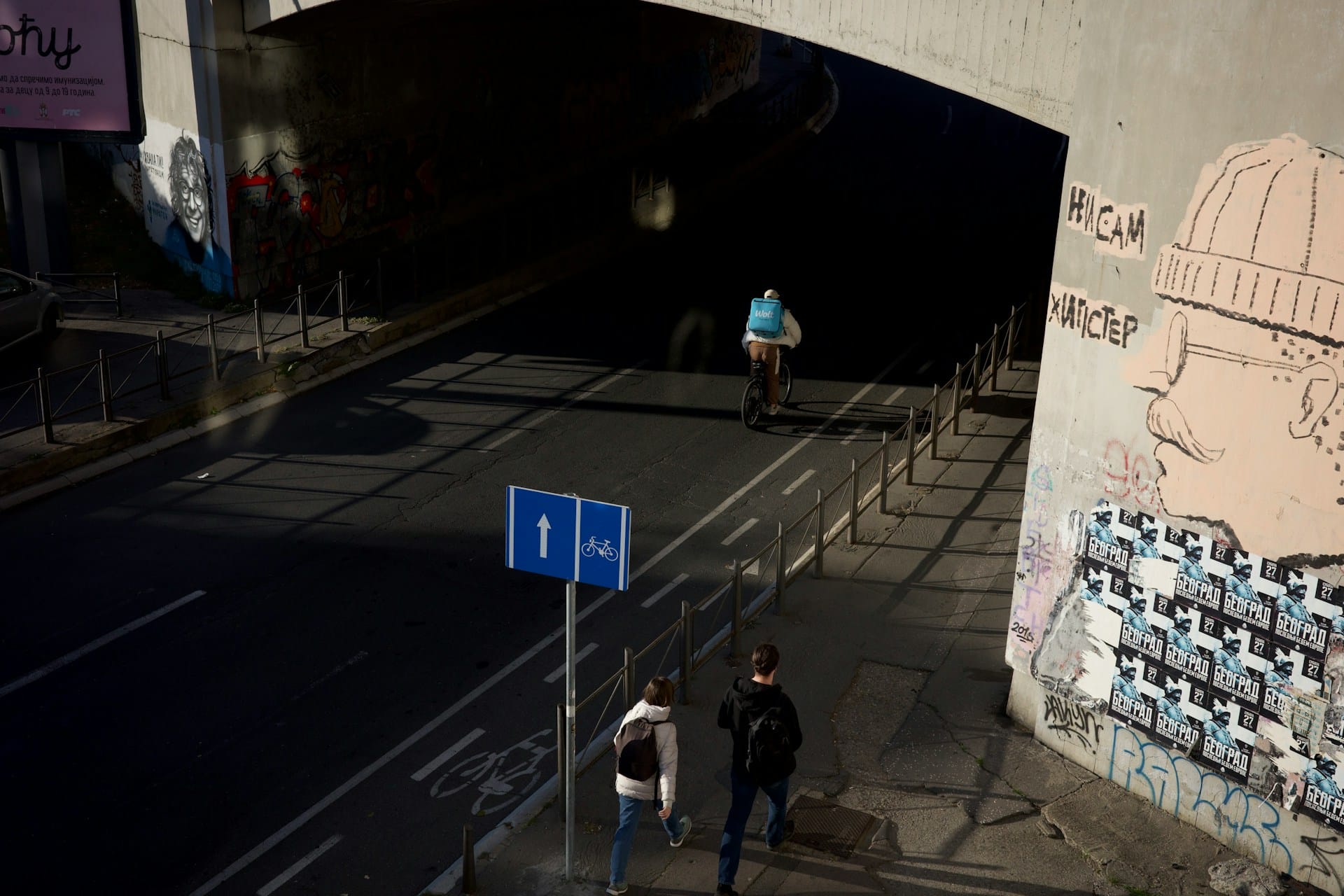
The underpasses in particular, fascinate me. These brutalist tunnels that could be anywhere, that urban planners probably regarded as purely functional spaces, have become something else entirely through use. Small shops colonise the walls. Vendors set up at the mouths. People don't just pass through - they linger, they meet, they turn infrastructure into community. There's a particular genius in this, the way humans consistently refuse to let concrete be only concrete
The Contrast That Draws
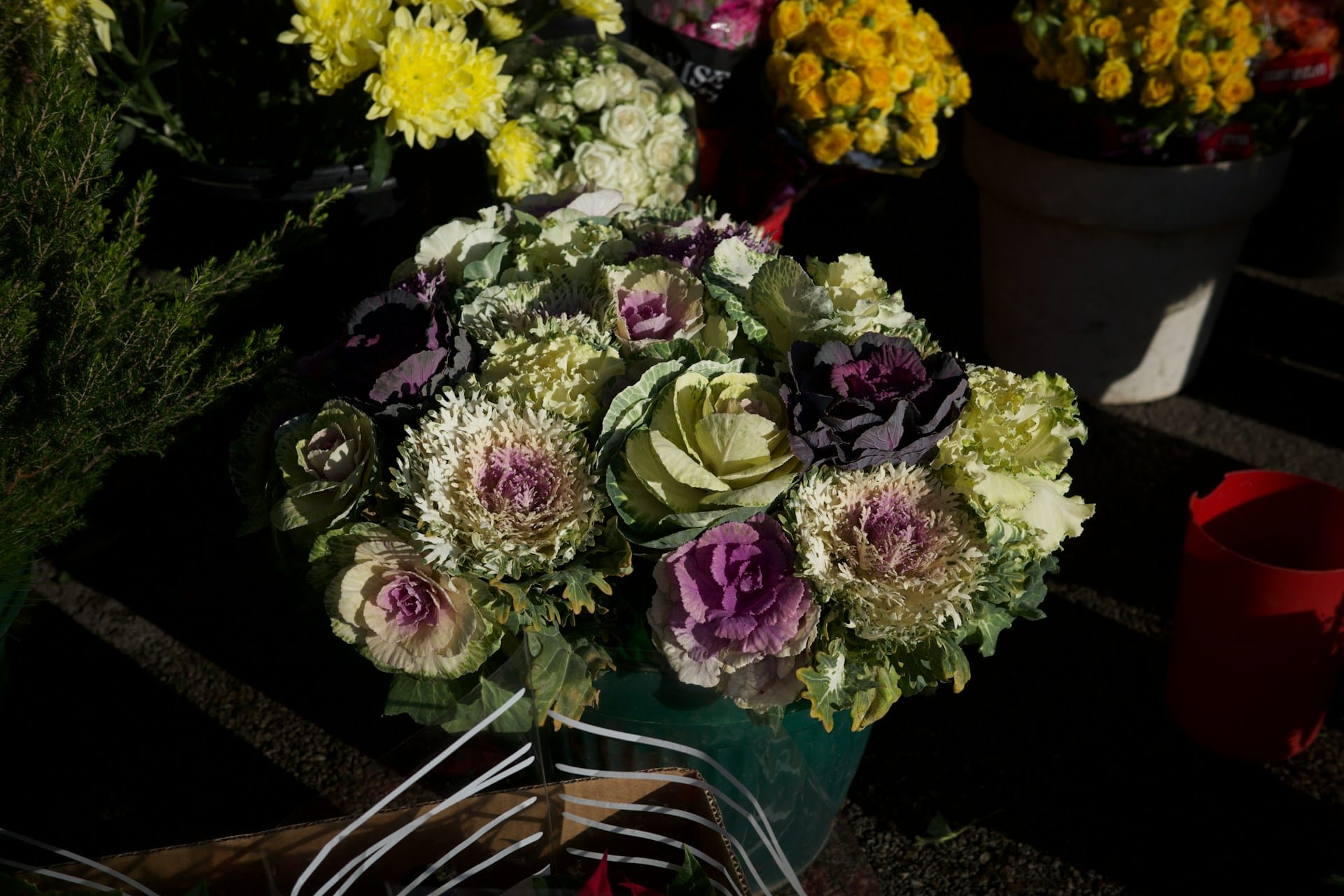
What pulls me here, what made me realise I needed to document it properly, is the contrast. Not the obvious tourist-board contrast between old and new, but something more nuanced. It's the way elegance persists in unexpected places - the way someone has planted flowers in a repurposed tire, the careful dignity of the old ladies dressed for the market, the improvised beauty of a café's outdoor seating fashioned from materials that were clearly meant for something else.
There's a café I pass regularly where the owner has created a small garden in the space between the building and the street. It shouldn't work - the concrete, the traffic, the utilitarian grimness of the surroundings. But somehow he's coaxed roses to grow there. Actual roses, blooming pink against grey walls, tended with such obvious love and care. Every time I see them, I'm drawn to think about persistence, about the human insistence on beauty even when - especially when - conditions don't logically support it.
This is the Belgrade I'm photographing. Not the fortress on the hill or the bohemian quarter that features in travel articles, but this everyday assertion of life against, or perhaps with, the worn infrastructure that contains it. The title for this piece came easily once I understood what I was seeing: The Rose of Belgrade. Beauty that blooms in spite of, or maybe because of, the thorns.
Eleven Millimetres of Truth
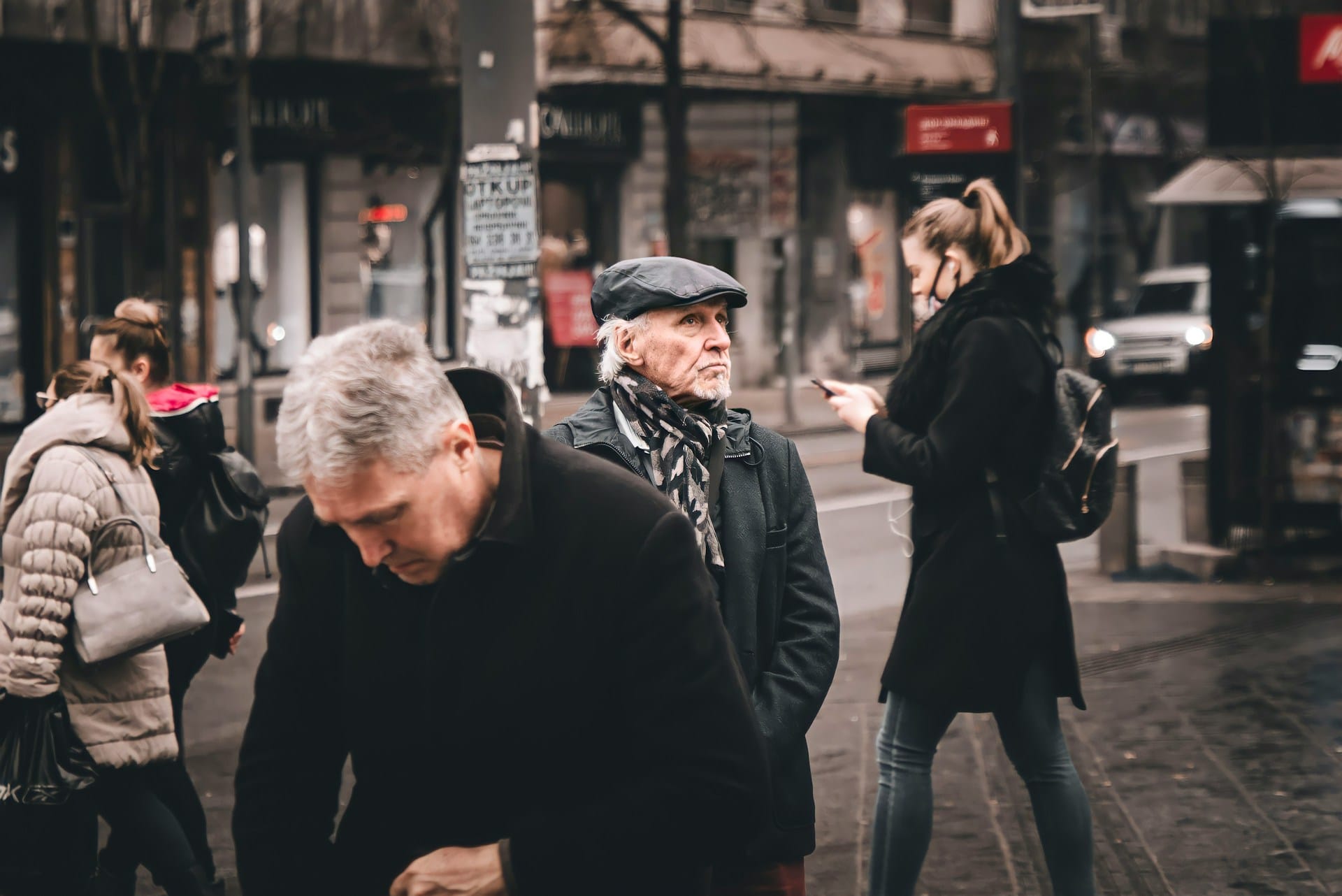
And here's a thing - my camera with its 11mm lens gives me roughly 16.5mm equivalent field of view. Is that technical enough for you? That's wide enough to capture genuine context, to show how things relate to each other rather than merely isolating subjects from their environments. This feels essential for what I'm trying to do. You can't understand Vračar by extracting details - you need to see how the layers stack, how the café spills onto the pavement which leads to the underpass which opens onto the boulevard where buses thread between pedestrians and vendors and the ongoing human drama of a neighbourhood that isn't precious about itself.
The wide angle forces a kind of honesty. You can't hide the messy edges, can't crop out the complexity. Everything is in the frame, demanding to be reckoned with. In the underpasses, it means capturing both the darkness and the light at the entrances, the full volume of these concrete tubes and the human-scale activity within them. In street scenes, it means the foreground detail that draws you in and the background architecture that provides context, all held (hopefully) in sharp focus simultaneously.
I'd planned to spend a concentrated few hours there with the camera, though truth be told, I'd been preparing for these hours all month without knowing it. Every walk has been reconnaissance. Every casual observation has been calibration. Now I wanted to be deliberate about it, to move through these streets with the specific intention of witnessing, of creating a record that honours what I've been shown.
Opening and Being Opened
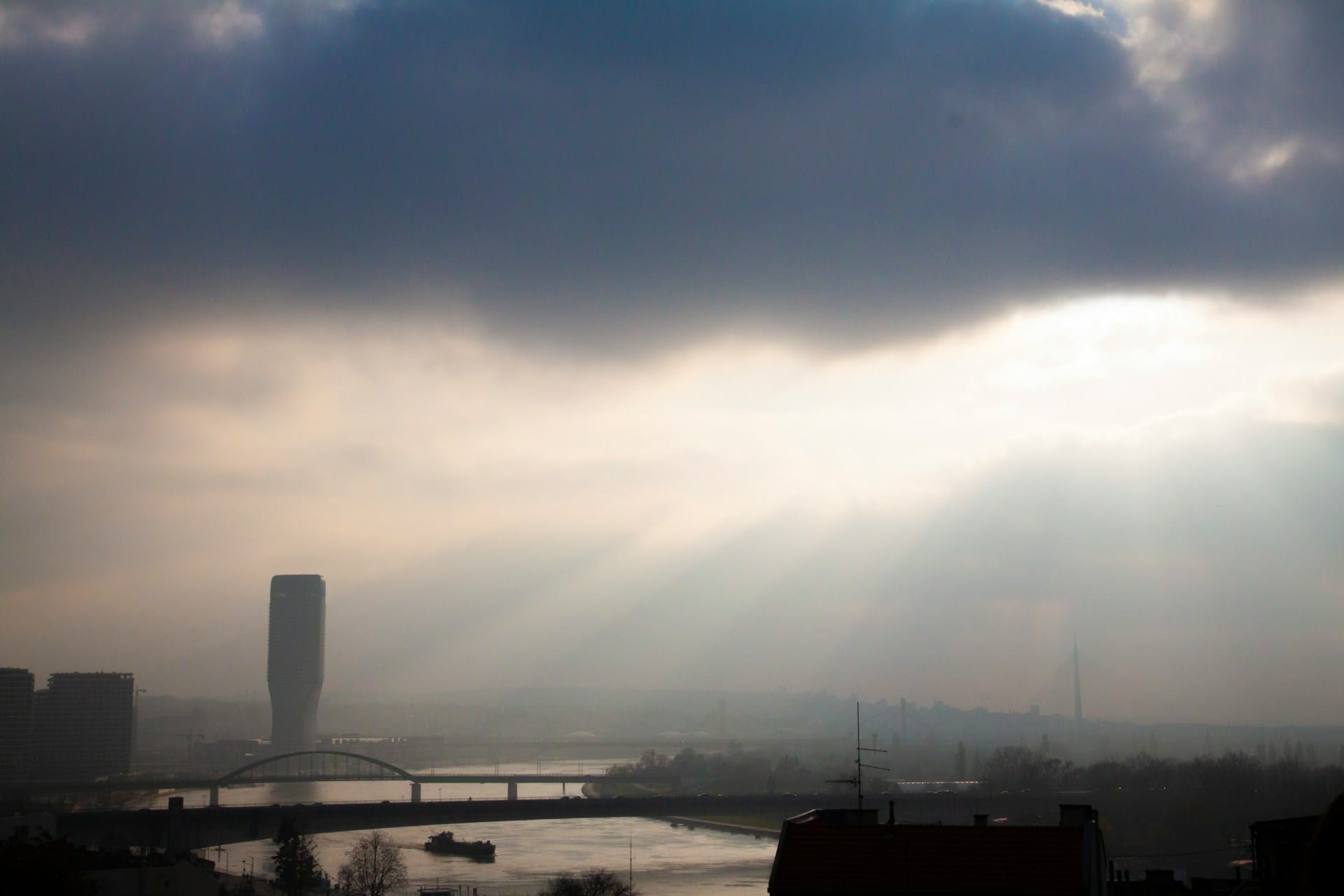
There's a particular phenomenology to discovering a place - not the first-day excitement when everything is foreign and therefore fascinating, but the slower revelation that happens when you start to distinguish between surfaces and depths. The first week, Belgrade was a collection of sights and impressions, unconnected facts about a city I didn't yet know how to read. The second week, patterns began to emerge. By the fourth week, something shifted - the city stopped being an object I was observing and became a relationship I was in.
This is what I mean about the rose opening. It's not just Belgrade revealing itself to me, but me learning to see what was always there. The worn facades were always worn. The improvisational beauty was always present. What changed was my capacity to recognise these things as beautiful, as valuable and worthy of attention and documentation. The city has been patient with my initial blindness, and now it's generous with its complexity.
Vračar has become my teacher in all this. Not through grand gestures but through the accumulated evidence of ordinary moments - the way light falls at rush hour, the patterns of foot traffic that reveal desire lines no planner intended, the sonic texture of a neighbourhood where four languages might be spoken in as many doorways. These details don't announce themselves. You have to be paying attention, and you have to be there long enough that attention becomes not effort but habit.
Why Monochrome, Why Now
Colour photography would capture a different truth - the specific green of trees in autumn, the faded advertisements painted on walls, the varied tones of concrete and brick. But monochrome captures the truth I'm interested in: the structural reality beneath the chromatic variation. In black and white, Vračar becomes timeless without becoming nostalgic. These images could be from last week or last decade, and that ambiguity feels right for a neighbourhood that exists somewhat outside the breathless pace of modern urban development.
Monochrome also emphasises what I'm really photographing: not things, but relationships. The relationship between light and shadow. Between shape and form. Between the monumental and the human-scaled. Between permanence and transience. Between the official story of a place and the actual lived experience of it. These relationships just don't need colour to be understood. In fact, I think colour would obscure them, directing attention to surface qualities rather than the deeper structures I'm trying to reveal.
The Archaeology of The Image
I walked Vračar with my camera the way I've been walking it all month, but this time with the deliberate intention of creating rather than just observing. I focussed on the elements that have accumulated in my vision: the underpasses and their human ecosystems, the juxtaposition of decay and care, the moments where improvised beauty asserts itself against utilitarian surroundings, the people who move through these spaces with a dignity that transcends circumstances.
The choice of such a wide angle let me work close, let me include context without losing intimacy. The monochrome strips away distraction and leaves only what matters: the evidence of lives being lived, of a neighbourhood that functions not despite its rough edges but through them, of beauty that doesn't announce itself but quietly persists.
This essay, these photographs, they're love letters of a sort. Not the romantic variety that obscures its object with idealisation, but the kind that sees clearly and loves specifically, thorns and all.
Belgrade is revealing itself to me like a flower opening, and Vračar is the petal I've been given to hold.
I wanted to photograph it the way it deserves: with attention, with honesty, with recognition that what looks worn down at first glance might, with patient observation, reveal itself as simply and beautifully worn in.
The rose of Belgrade blooms in unlikely places. I'm just learning to recognise its particular scent, its specific way of catching light. The images follow, but the seeing came first. This past month has taught me that documentation is always only a secondary act - first you have to become the kind of person who notices what's worth documenting.
And this place, this Vračar, patient teacher that it is, has been showing me exactly that: what's worth seeing, what's worth preserving, what kind of beauty matters when you strip away everything that merely looks beautiful. The camera is just a way of saying thank you, of recording evidence that I was paying attention, that I allowed myself to be changed by what I saw.
After all, the most honest photographs don't capture places - they capture relationships. And my relationship with Belgrade is still unfolding, still revealing itself, still teaching me to see. The Rose of Belgrade is both title and subject, both metaphor and method. It's what happens when you stop trying to find beauty and let beauty find you instead, in the least likely places, blooming between the cracks.


