Introduction
There's a moment that happens on the metro platform - a shift in how your body moves through space - that reveals everything about belonging.
For five weeks now I've been establishing infrastructure: registering a business, navigating bureaucracy, setting up bank accounts and co-working memberships. The unglamorous groundwork of building a life in a city. And somewhere in that time, without quite noticing when it happened, Warsaw granted me an upgrade.
I started to glide.
Not metaphorically you understand. Physically. A sensation of being carried by the city's momentum, surfing through her transportation systems with a grace I haven't earned anywhere else. It feels like unlocking a special power in a video game - permission to move differently, to inhabit the infrastructure with something other than utilitarian efficiency.
This is the first self-investigation for OS:Warszawa. An attempt to understand what happens when postmodern theory becomes embodied practice. When months of analysing cities as performances suddenly becomes the way you move through them. When the will-to-meaning creates literal momentum.
What follows is a meditation on the glide - what it is, what it reveals, what it means to earn the right to move with grace through a city that's finally, genuinely, yours.
I. The Discovery
As mentioned above, I've been riding the Warsaw metro a great since I arrived back here at the start of the year, and somewhere in that time, without quite noticing when it happened, I started doing a thing.
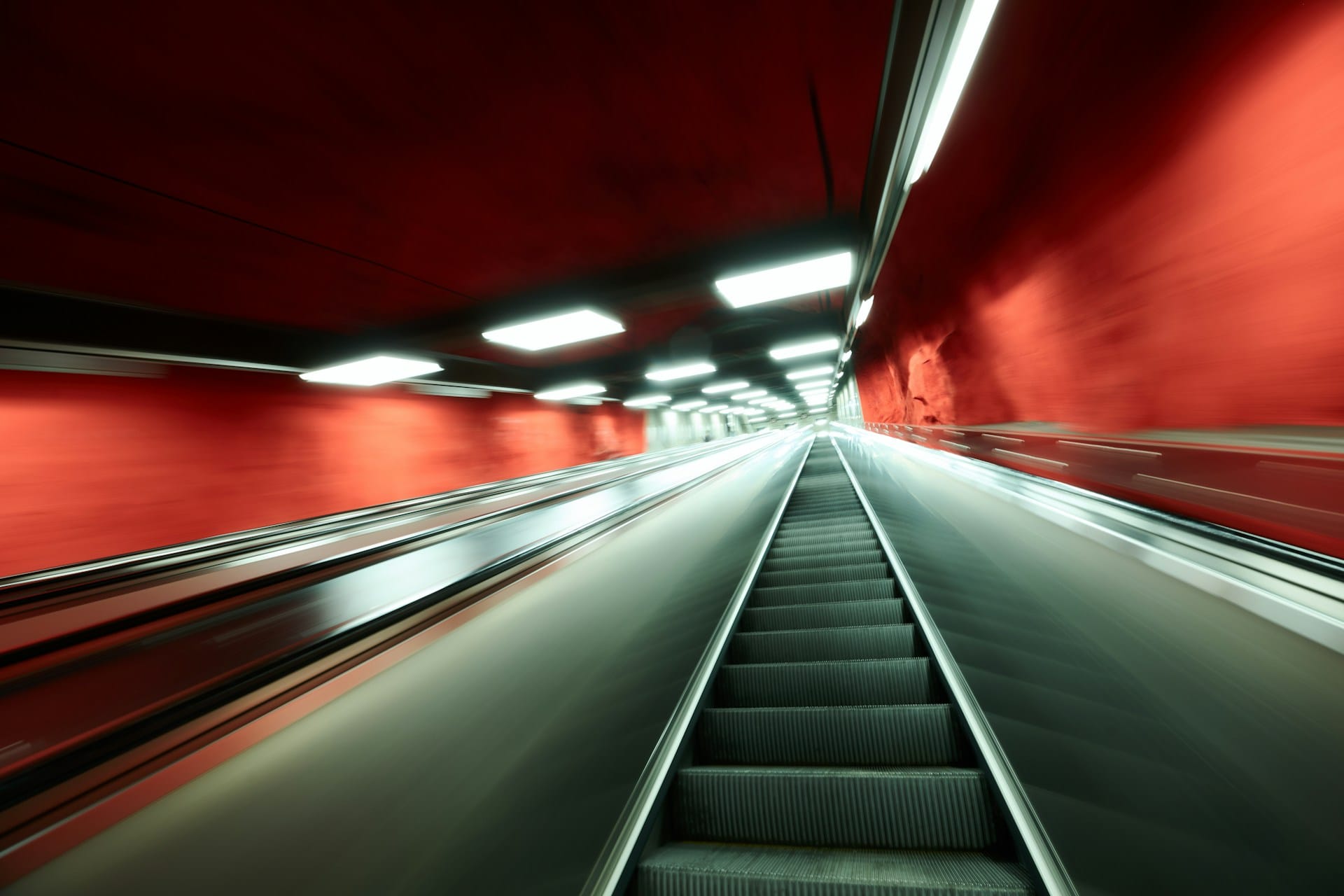
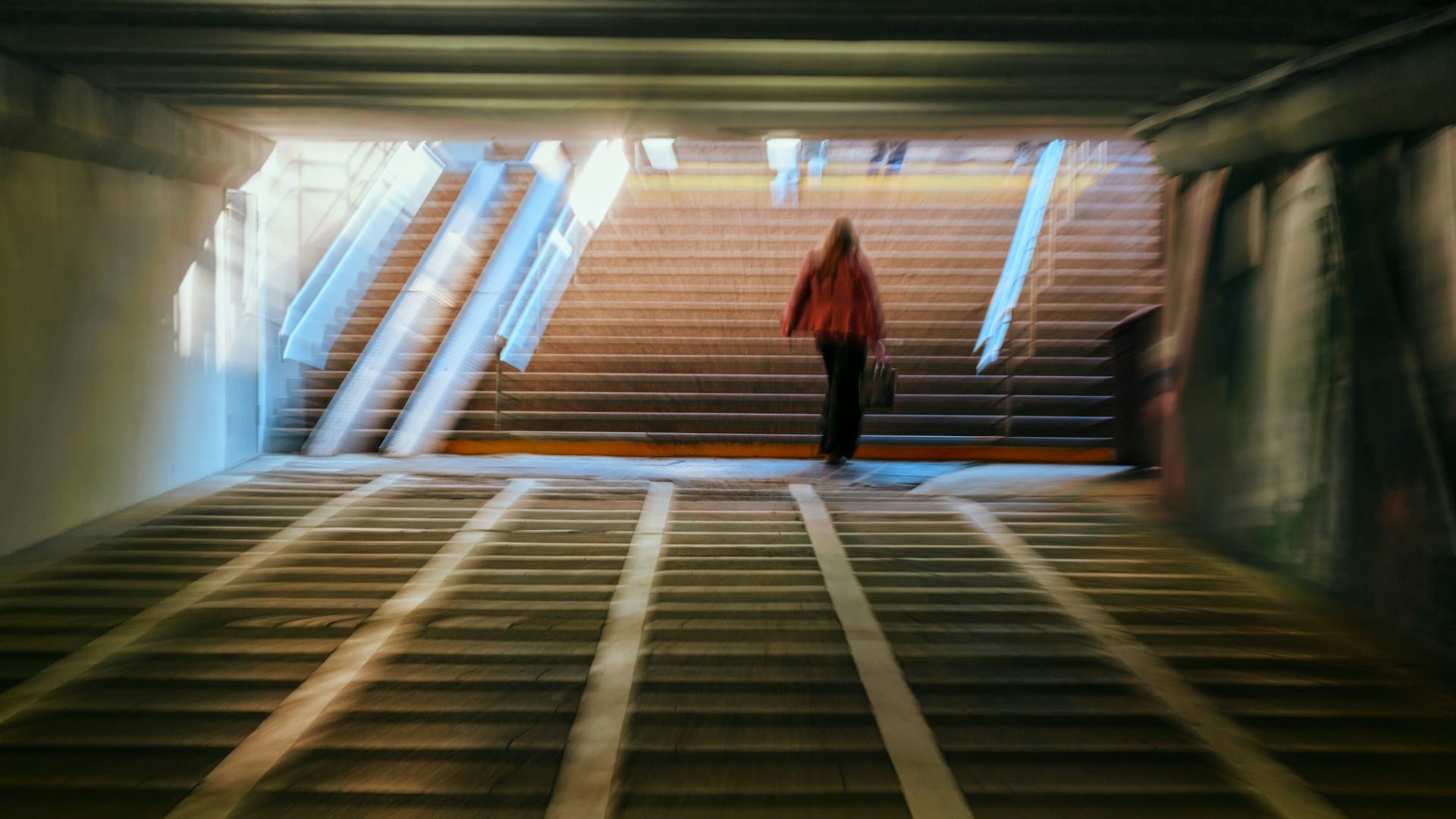
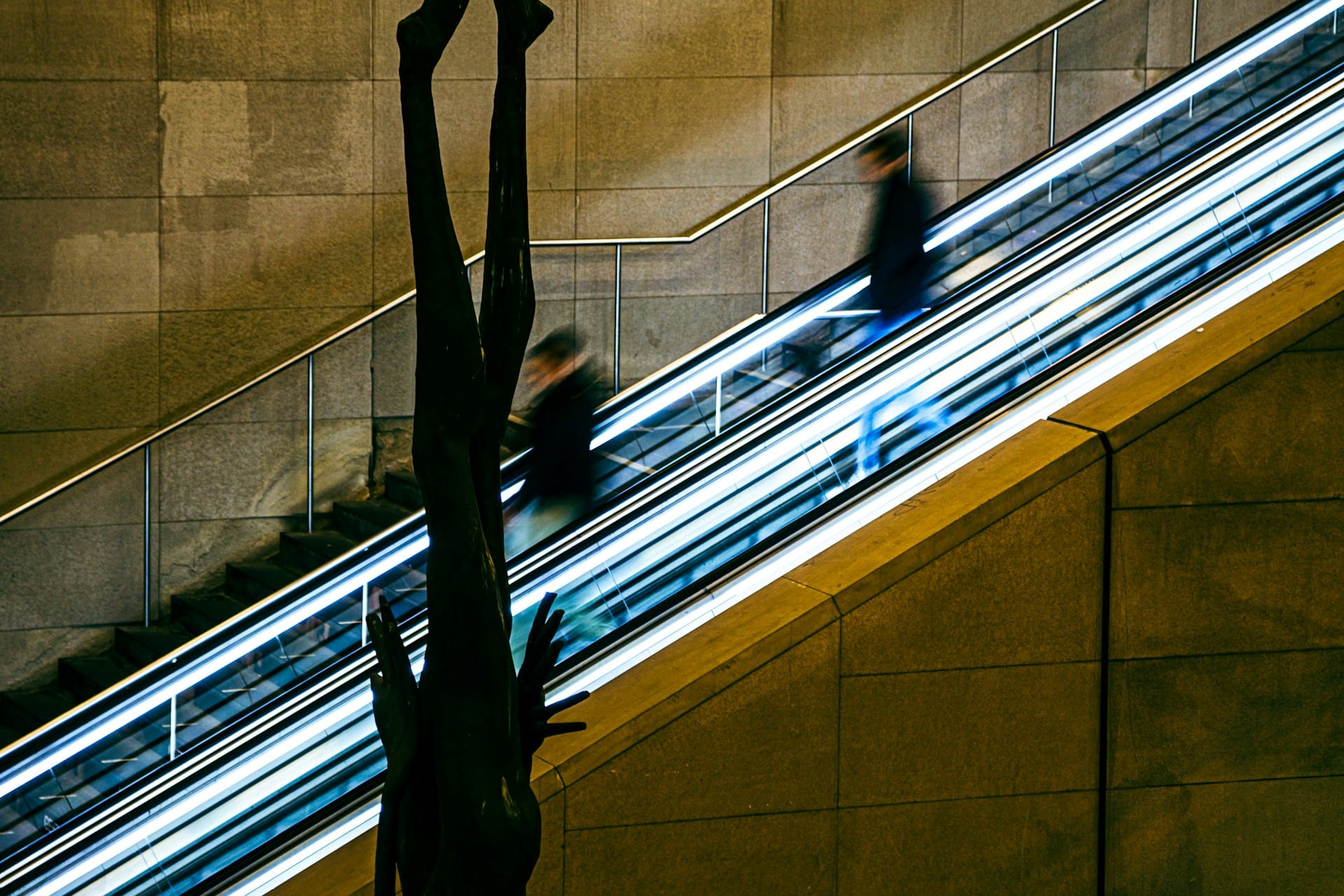
It begins the moment I enter the platform. Instead of the purposeful stride toward efficiency - nearest door, fastest route, optimal positioning for my exit - I find myself drifting. Strolling gently along the platform to find a spot that feels "right" according to criteria I couldn't articulate if you asked me. As the train approaches, something shifts in my body. I start to glide. Not rushing, not quite walking, but moving with a kind of fluid momentum that feels less like locomotion and more like being transported by the city itself.
I've started calling it Metro Surfing.
It's not a metaphor. It's a genuine sensation - like I've unlocked a special power in a video game. Like Warsaw has granted me an upgrade, permission to move through her infrastructure with a grace I haven't earned anywhere else. And it's not just the metro. It happens on trams, buses, trains. The moment I enter any part of the city's transportation network, I feel it: this capacity to glide, to surf, to be carried by something larger than my individual will.
For someone who has spent months theorising about cities, about displacement and belonging, about the performance of place - this felt significant. Not just pleasant, but meaningful. The kind of experience that demands investigation.
So here we are. The first self-investigation for OS:Warszawa, and perhaps the central question of The Warsaw Winter Theatre Company: What does it mean when the city you've claimed as yours finally claims you back?
II. The Theory Made Flesh
Last year, I spent months working through what I called Travels in Hyperreality - a postmodern investigation of my own transformation through sequential residency. I read Baudrillard and Eco, worked through theories of simulation and spectacle, and ultimately landed on the concept of the city as performance. I was trying to understand my relationship to place through the lens of postmodern theory, documenting my role as both observer and participant in the theatre of urban life.
It was intellectual work, maybe. Important work, to me. But it was about experience, not of it.
The glide is different.
The glide is what happens when you stop analysing the performance and realise you've become a performer. When the theoretical framework you've been constructing suddenly becomes the ground beneath your feet. When Travels in Hyperreality stops being a project you're working on and starts being the way you move through the world.
I didn't set out to embody the theory. I didn't wake up one morning and decide to practice gliding as a conscious exercise in postmodern urbanism. It just... happened. My body learned something my mind had been circling around. The metro became a space where I could feel, in my muscles and momentum, what it means to belong to a city that exists simultaneously as material reality and as performance, as infrastructure and as meaning.
This is what Viktor Frankl understood about the pursuit of meaning: it's not abstract. It's not something you think your way into. Meaning becomes visible in how you move, what you notice, where you allow yourself to be carried. The will-to-meaning isn't a philosophical position; it's a force that propels you through space.
When I glide through the Warsaw metro, I'm not just getting from point A to point B. I'm enacting a relationship with the city that's grounded in the constant search for significance. The momentum I feel - that surfing sensation - is generated by my orientation toward meaning. And somehow, impossibly, the city responds. She gives me the upgrade. She grants permission.
III. The Glide vs. The Rush
Watch people on the metro platform and you'll see two distinct choreographies.
There's the Rush - the purposeful stride, the calculated positioning, the body moving with efficient determination toward the nearest door. These are people who have places to be, schedules to keep. They treat the metro as pure infrastructure, a mechanical system for transporting bodies through space with minimal friction. Their movements are optimised for speed and convenience.
Then there's the Glide.
The Glide refuses utilitarian logic. It prioritises something else - some quality of rightness that has nothing to do with efficiency. It reads the platform not as a problem to be solved but as a field of possibility to be sensed. Where does the light fall? What's the acoustic quality of this particular section? How are other bodies distributed through the space, and what kind of magnetic pull do they exert?
The Glide is urban slow motion in a fast-forward space.
And here's what fascinates me: both choreographies are performances, but they're performances of radically different relationships to the city. The Rush performs mastery - I know where I'm going, I know how to get there, I am in control. The Glide performs something more like surrender - I trust this space, I can afford to be open, I belong here enough to move without urgency.
Guy Debord wrote about the society of the spectacle, about how we've become alienated from authentic experience, reduced to passive consumers of images and simulations. In his framework, the metro would be pure spectacle - a choreographed system that shapes our movements according to capitalist logic, efficiency über alles.
But the Glide suggests something more complicated.
When I glide through the metro, I'm not consuming Warsaw as spectacle. I'm not a tourist photographing the architectural details or a commuter grimly enduring the journey. I'm performing my way into authentic relation with the city. I'm creating a kind of spectacle - my own hyperreality, documented and constructed - but it's spectacle-as-meaning-making rather than spectacle-as-alienation.
I'm using the tools of postmodern simulation (performance, documentation, constructed experience) to generate genuine belonging.
IV. The Nature of Things
There's a moment in Metro Surfing that happens almost every time now. I'm gliding along the platform, and I'll notice something - the way light refracts through the yellow M sign, the particular echo of footsteps in this station, the face of a stranger caught in a moment of private reverie. And I'll think: yes, this is the nature of things.
Not "the nature of Warsaw" or "the nature of metro systems." Just: the nature of things. The way reality arranges itself when you're paying attention with your whole body, when you're moving through space with grace rather than purpose.
Debord would probably be horrified by this claim. After all, I'm not documenting objective reality. I'm not capturing some essential truth about Warsaw that exists independent of my observation. I'm creating a highly subjective, aestheticised, thoroughly performed version of the city.
But maybe that's precisely the point.
The nature of things isn't something you discover by removing yourself from the equation. It's what emerges when someone moves through space with intentional grace, powered by the search for meaning. It's the reality that becomes visible when you stop rushing and start gliding.
This is where Frankl and Debord converge in unexpected ways. Frankl argued that meaning isn't something you create arbitrarily - it's something you detect, discover, respond to. The world presents meaningful possibilities, and your task is to remain open enough to perceive them. Debord argued that the spectacle has colonised our capacity for authentic experience, replacing direct life with representations of life.
But what if the glide represents a third way? What if moving through the city with this kind of attentive grace - simultaneously performing and belonging, creating spectacle and discovering meaning - is how you reclaim authentic experience in a postmodern world?
The nature of things, in this framework, is neither purely objective nor purely constructed. It's what happens at the intersection of your attention and the world's offering. It's collaborative. Co-created.
V. On Earning the Upgrade
Here's what I keep coming back to: the glide feels earned.
Not in the sense that I worked for it or deserved it through some moral calculus. But earned in the way belonging is earned - through time, attention, repeated return. Through the willingness to keep showing up, keep noticing, keep allowing the city to shape you even as you shape your relationship to her.
I couldn't have glided through Belgrade. Not because Belgrade is worse or less worthy, but because Belgrade wasn't mine in the way Warsaw is mine. I was productive there, certainly. I built Phenomenal Sobriety, completed months of intensive creative work. But I never felt that sense of grace through belonging. I never unlocked the upgrade.
Warsaw is different. Warsaw is my happy place, my chosen home base, the city I return to again and again in my sequential residency practice. And after five weeks of registration bureaucracy, business setup, residency applications - after all that unglamorous groundwork - the glide emerged as a kind of gift.
You've done the work, the city seemed to say. You've earned this. You can move through me now with grace.
For someone who is living through displacement, who has theorised endlessly about the performance of place and the construction of belonging, this feels precious. It's not taken for granted the way a native Varsovian might experience their home. It's noticed, savoured, celebrated.
For me, the glide is my proof that I belong here. Not permanently, not exclusively, but genuinely. I have permission to move slowly through her spaces. I have permission to surf.
VI. The First Investigation
This is what OS: Warszawa is for - to document these moments when the city reveals something about the nature of belonging, meaning, performance. When the theoretical frameworks I've been building suddenly become lived experience.
The Warsaw Winter Theatre Company began as a methodology for analysing cities as performances, for understanding my role as both observer and participant in urban theatre. But the glide suggests something more: that the best analysis happens when you stop observing and start moving. When you let your body learn what your mind has been circling around.
So this is the first self-investigation. A documentation of the moment when postmodern theory became embodied practice. When Travels in Hyperreality stopped being a retrospective analysis and started being the way I move through the present.
And here's what I'm learning: the glide isn't replicable. I can't teach you how to Metro Surf. I can't give you the criteria for finding the "right" spot on the platform. Because the glide is specific to my relationship with Warsaw, generated by my particular history of displacement and return, animated by my specific orientation toward meaning.
But maybe that's the larger lesson. Maybe belonging always works this was - earned through attention, discovered through movement, confirmed by the city's willingness to carry you.
Maybe we all have our own versions of the glide, our own special powers that emerge when we finally find the place that's ours. Our own ways of moving through space that feel less like transportation and more like grace.
VII. Momentum
The will-to-meaning, Frankl insisted, is the primary motivational force in human life. Not the will-to-pleasure, not the will-to-power, but the fundamental drive toward significance, purpose, coherence.
What I'm discovering in Warsaw is that this drive has a physical dimension. The pursuit of meaning creates literal momentum. When you're constantly searching for significance - in the play of light on tile, in the rhythm of arrival and departure, in the way strangers arrange themselves through space - that searching propels you forward. It becomes a force you can surf.
This is what differentiates the glide from aimless drift. I'm not wandering without direction. I'm being carried by my orientation toward meaning, by my commitment to noticing, by my willingness to remain open to what the city wants to show me.
The momentum is real. Physical. Undeniable.
And it's this momentum - generated by the constant search for meaning - that makes the glide possible. Without it, I'd just be standing on the platform like everyone else, waiting for the train to arrive so I can get where I'm going. With it, I'm participating in something larger. I'm being transported not just through space but through layers of significance, through my own hyperreality, through the performance of belonging.
VIII. Coda: What the Metro Knows
Five weeks in Warsaw. Five weeks of bureaucracy and business setup and all the unglamorous infrastructure work that makes a creative life possible. And then, quietly, the glide emerged.
I like to think the metro knew I needed this. That after all those meetings and registrations and applications, after selling my UK car and setting up bank accounts and navigating Polish administrative systems, I needed permission to move with grace again. I needed to remember that this city is mine, that I belong here, that I've earned the upgrade.
So she gave it to me. Warsaw granted permission. The metro became not just infrastructure but invitation. A space where I could feel, in my body and momentum, what it means to belong.
This is what I'll be investigating over the coming weeks and months. Not just the glide itself, but what it reveals about the relationship between movement and meaning, performance and authenticity, theory and embodied practice. How does the pursuit of meaning create the permission to move differently? How do we earn the right to glide?
The Warsaw Winter Theatre Company is ready for its next performance. And this time, I'm not in the audience. I'm on stage, surfing through the city's arteries, carried by forces I'm only beginning to understand.
The nature of things awaits. And I'm gliding toward it, one metro ride at a time.